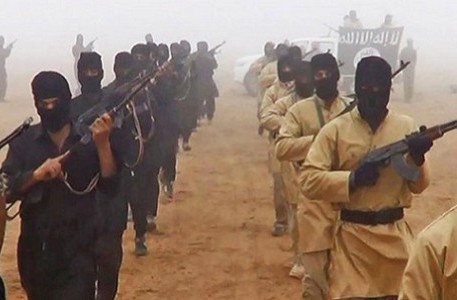
The question is deliberately brutal, almost irritating: why don’t two billion Muslims kill us all? It is a question that scandalizes only those who pretend not to understand the real issue. This is not about accusing every Muslim of being a murderer, a terrorist, or a jihadist. That would be nonsense, as well as a useless generalization. The point is something else, and it is much more serious: if Islam were simply what jihadism claims it to be, if every Muslim applied literally the most militant readings of Islamic sources, if the relationship with the infidels were always and everywhere the one preached by radical Islamist groups, the world would already have collapsed into permanent war without truce.
The fact that this does not happen does not prove that the problem does not exist. If anything, it proves that between Islamic sources, legal interpretations, the real lives of Muslims, political interests, social habits, fear of consequences, the pressure of modern states, and the simple human instinct to live normally, there is an enormous distance. And it is precisely within that distance that we must reason, without propaganda on one side and without naivety on the other.
The most convenient answer offered by Islamic apologetics is always the same: terrorism has nothing to do with Islam. It is a reassuring formula, useful for talk shows and interfaith conferences, but intellectually weak. If jihadism truly had nothing to do with Islam, jihadists would not quote the Qur’an, hadith, sīra, tafsīr, classical jurisprudence, prophetic models, and Islamic religious categories. They would not speak of jihad, martyrdom, unbelievers, apostates, booty, paradise, sharia, ummah, and caliphate. They would not use the internal vocabulary of the Islamic tradition to justify violence.
This does not mean that every Muslim shares that reading. It does mean, however, that this reading does not come out of nowhere. It does not come from Mars, from a Western handbook, from a CIA invention, or from an Islamophobic caricature. It comes from real religious and legal material, present in the history of Islam, discussed in Islamic texts, used by jurists, reinterpreted by preachers, radicalized by Islamist movements, and transformed into a political program by jihadist groups.
The False Argument: “If Islam Were Violent, All Muslims Would Be Violent”
One of the most common arguments used to neutralize any criticism of Islam is this: if Islam were truly problematic, then all Muslims would have to be violent. But since the majority of Muslims do not kill anyone, Islam would therefore have no problem at all. It is an apparently simple argument, but in reality it is fallacious.
No ideology is applied by all its adherents in the same way, with the same intensity, and with the same consequences. Not all communists ran gulags. Not all nationalists organized wars. Not all revolutionaries built regimes of terror. Not all believers in a religion apply every uncomfortable passage of their own tradition. Human beings often live in contradiction with their own doctrines: they select, ignore, reinterpret, adapt, forget, obey halfway, or do not obey at all.
This also applies to Muslims. Millions of Muslims live ordinary lives: they work, study, raise children, seek peace of mind, think about their mortgage, their health, their family, their job, their future. Many know little about the sources of their own religion. Others read them in a spiritual, selective, or cultural way. Others still sincerely reject jihadism, while remaining within a tradition that also contains material very difficult to reconcile with modern freedom.
The point, therefore, is not to say that all Muslims are jihadists. The point is to say something much more precise: the fact that the majority of Muslims do not practice jihadist violence does not automatically absolve Islamic sources, classical jurisprudence, and Islamist ideology from their most aggressive contents.
The Distance Between Lived Islam and Normative Islam
Real life is always more complex than doctrine. A Catholic may not know the catechism. A Marxist may not have read Marx. A liberal may live like a statist. A Muslim may not know the hadith on war, apostasy, slavery, the submission of non-Muslims, or the normative superiority of Islam. Religious belonging does not automatically coincide with the coherent and complete application of every religious rule.
This distance is fundamental. And it is precisely here that apologetic rhetoric collapses. When one criticizes jihad, punished apostasy, dhimma, the subordination of infidels, the political role of sharia, or violence against those who insult Muhammad, the usual objection is: “but my Muslim neighbor is a good person.” Very well. But nobody was putting the neighbor on trial. What was being analyzed was a religious, legal, and political tradition.
The Muslim neighbor may be peaceful, kind, honest, and perfectly integrated. This does not erase the problem of the texts. It does not erase the legal schools. It does not erase the punishments prescribed for apostasy in the classical tradition. It does not erase the history of conquests. It does not erase the idea of the superiority of the ummah. It does not erase the distinction between believers and unbelievers. It does not erase the verses and hadith used to justify religious war, including the famous Qur’anic verse 9:5. It does not erase the fact that Islamists find in the Islamic tradition a ready-made conceptual arsenal.
So Why Doesn’t It Happen?
If problematic texts and doctrines exist, why do two billion Muslims not behave as jihadists would like them to? The answer is simple: because human beings are not theological robots. Belonging to a religion is not enough to apply every extreme consequence of that religion. Local culture, family, fear of the law, economics, the desire to live, the influence of modernity, contact with non-Islamic societies, practical secularization, religious indifference, doctrinal ignorance, moral rejection of violence, political opportunism, and the strength of states all matter.
In many Muslim countries, moreover, the population is itself a victim of jihadism. Jihadist groups often massacre other Muslims, accused of apostasy, collaboration, deviation, heresy, Shiism, Sufism, secularism, or simple insufficient obedience. This is an important fact: jihadism is not only a threat to the West, but also an instrument of terror within the Islamic world itself.
But even this does not automatically absolve Islam as a doctrinal system. On the contrary, it shows the problem even more clearly: when a religious ideology contains categories such as apostasy, unbelief, the superiority of divine law, war in the path of Allah, and the subordination of political order to revelation, the conflict is not limited to the relationship between Muslims and non-Muslims. It can also explode within Islam itself, against those judged less pure, less obedient, less Islamic.
Jihadism Is Not All of Islam, but It Is Not Separable from Islam
The most accurate formula is this: jihadism is not all of Islam, but neither is it alien to Islam. It is not all of Islam because Islamic history is vast, plural, contradictory, made also of philosophy, mysticism, poetry, trade, administration, political compromises, daily life, and different interpretations. But it is not alien to Islam because it uses real Islamic categories, real Islamic sources, and real Islamic precedents.
The jihadist does not present himself as a deranged atheist. He presents himself as a believer more consistent than the others. He does not say: “let us abandon Islam.” He says: “let us return to true Islam.” He does not burn the Qur’an. He quotes it. He does not despise Muhammad. He imitates him as warrior, lawgiver, and political leader. He does not reject sharia. He wants to apply it. He does not deny the ummah. He wants to purify it. He does not erase the distinction between believers and infidels. He radicalizes it.
This is precisely what makes the problem serious. Terrorism of jihadist origin is not a mere criminal deviation detached from its religious language. It is a militant, selective, brutal, and political reading of material that belongs to the Islamic tradition. One may debate how representative it is. One may debate how majoritarian it is. One may debate how historically distorted it is. But one cannot pretend that it has no relationship whatsoever with Islam.
Every time criticism of Islam is raised, the objection appears: “not all Muslims.” True. But it is often used not to make a necessary distinction, but to shut down the discussion. “Not all” becomes an intellectual anesthetic. Not all, therefore let us not talk about it. Not all, therefore let us not analyze the sources. Not all, therefore let us not discuss sharia. Not all, therefore let us not mention jihad. Not all, therefore the problem disappears.
But no serious analysis works like that. When communism is criticized, it is not being said that every communist personally ran a prison camp. When ethnic nationalism is criticized, it is not being said that every patriot is a criminal. When a religious doctrine is criticized, it is not being said that every believer is identical to the harshest text of his tradition. The distinction between person and doctrine is necessary, but it must not become a trick to make the doctrine untouchable.
“Not all” is fine once. After that, it becomes evasion. Of course not all Muslims are jihadists. Of course not all Muslims want political sharia. Of course not all Muslims approve of the punishment for apostasy. Of course not all Muslims hate infidels. But the issue remains: what do the sources say? What did classical jurisprudence teach? What do Islamists preach? What happens when certain texts are taken seriously?
Private Islam, Communal Islam and Political Islam
The most dangerous point is not the Muslim who privately lives his faith. The point is Islam when it claims to become public order, law, compulsory collective identity, state power, censorship, education, court, moral police, and criterion of citizenship. There the problem is no longer personal spirituality. There the problem becomes political.
Political Islam does not merely say that an individual must pray, fast, or believe. It demands that society be shaped by religious law. It demands that freedom of expression stop before Muhammad, as shown by the issue of criticism of Muhammad in Islamic sources. It demands that apostasy be treated as treason. It demands that women be defined by prescribed roles. It demands that the non-Muslim be tolerated only within a subordinate, or at least controlled, position. It demands that human law be inferior to divine law.
This is the heart of the matter. Not the Muslim as a person, but Islam as a total normative project. Not private faith, but religion when it becomes a system of power. Not the believer who prays, but the ideology that claims to discipline even those who do not believe.
The Peaceful Majority Is Not Enough
Another frequent argument is that the majority of Muslims are peaceful. Even if we grant this, it is not enough. A passive, silent, or indifferent majority does not automatically neutralize an ideologically motivated minority. Political history teaches that organized, convinced, and doctrinally aggressive minorities can weigh far more than lukewarm majorities.
The problem is not how many Muslims are ready for violence. The problem is how many are willing to openly oppose the doctrinal roots that justify it. Here the question becomes much more uncomfortable. Condemning an attack is easy. Saying that offensive jihad, the punishment for apostasy, the subordination of infidels, and the penal untouchability of Muhammad belong to a past that must be definitively archived is much more difficult.
The real question is not: “are all Muslims violent?” The real question is: how many Muslims are willing to say clearly that some parts of the classical Islamic tradition are morally unacceptable today? Not reinterpreted for convenience. Not swept under the rug. Not blamed on the West. Not dismissed as misunderstandings. Truly unacceptable.
The Islamophobia Trick
When one cannot answer on the merits, the accusation of Islamophobia is used. It is a convenient word because it shifts attention from the content of the criticism to the alleged moral pathology of the critic. The discussion is no longer about the Qur’an, hadith, sīra, fiqh, jihad, apostasy, or sharia. The discussion becomes about the fact that you are supposedly bad, prejudiced, racist, obsessed, dangerous.
But Islam is not a race. It is a religion, a doctrine, a historical civilization, a normative system, a worldview. As such it can be studied, criticized, challenged, dismantled, and even strongly rejected. Criticizing Islam does not mean persecuting Muslims. It means exercising freedom of criticism toward a religious system that, especially in its political and legal forms, has enormous public implications.
Of course criticism can become hatred if it targets people as a human group and not ideas. But this principle cannot be transformed into preventive censorship. Saying that Islam contains elements incompatible with modern freedom is not the same as saying that every Muslim is an enemy. Saying that jihadism has Islamic roots is not the same as saying that every Muslim is a jihadist. Saying that classical sharia is incompatible with modern individual rights is not the same as calling for discrimination against Muslims.
The Real Paradox
The real paradox is that the very fact that two billion Muslims do not kill us all shows how many Muslims already live at a practical distance from the harsher, more political, more legalistic, and more militant Islam. Many do not apply what jihadists would like to apply. Many ignore what radical preachers quote. Many prefer normal life to holy war. Many behave, fortunately, better than the texts used by extremists.
But this is not an argument in defense of the most problematic sources. If anything, it is an argument against the idea that those sources should continue to enjoy sacred immunity. If millions of Muslims can live without applying jihadism, without punishing the apostate, without subjugating the infidel, without invoking sharia as state law, then it means those contents can be criticized, rejected, and historicized. They are not inevitable. They are not untouchable. They are not above moral judgment.
The initial question, therefore, is not meant to insult Muslims. It is meant to dismantle a rhetorical trap. If jihadism does not represent all Muslims, fine. But then one must explain why it continues to find arguments within Islam. If the majority of Muslims are not jihadists, fine. But then one must ask why so many Islamic societies struggle to separate religion and politics. If Islam is peace, as is repeated everywhere, then one must explain why so much of its classical legal tradition does not resemble a modern theory of religious freedom at all.
It is not enough to say: “the majority is peaceful.” One must have the courage to say that freedom of conscience is worth more than sharia, that criticism of Muhammad must be free, that the apostate must fear nothing, that the infidel must not be subordinated, that women must not depend on patriarchal religious norms, that no sacred text can stand above the fundamental rights of the person. The same issues emerge when addressing the Islamic punishments prescribed in the sources, the question of legal violence, and the relationship between religious law and individual dignity.
Until this step is taken, the discussion remains trapped in the usual comedy: on one side those who see only terrorists, on the other those who see only victims of prejudice. In the middle lies the real problem: a religious tradition with extremely harsh normative material, a modernity that makes it increasingly indefensible, an apologetics that minimizes it, and an Islamism that takes it seriously.
Conclusion
Why don’t two billion Muslims kill us all? Because Muslims are not a uniform mass of religious automatons. Because many live their belonging in a cultural, private, selective, or moderate way. Because modern states limit violence. Because daily life weighs more than ideology. Because fear of consequences matters. Because real Islam, as lived by people, is often less coherent than the Islam dreamed of by fanatics.
But this answer does not save apologetics. It destroys it. If the world is not already in total war, it is not because the harshest sources do not exist. It is because many Muslims, consciously or not, do not live according to the most radical consequences of those sources. And that is fortunate.
The problem, therefore, is not to accuse every Muslim. The problem is to stop protecting Islam from its own sources. Criticism must remain free to say what apologetics does not want to hear: jihadism does not represent all Muslims, but it does not arise outside Islam; the majority of Muslims are not violent, but this does not erase the violent contents of the tradition; private faith deserves freedom, but political and normative Islam deserves very harsh criticism.
The initial question is uncomfortable because it forces everyone out of propaganda. Not all Muslims are the problem. But some Islamic ideas, some Islamic sources, some Islamic norms, and some political ambitions of Islam remain an enormous problem. And until it is possible to say this without being accused of hatred, we will not have defended coexistence: we will merely have protected the taboo.
Related articles: La Jihad, questa sconosciuta; Does Qur’an 9:5 Teach Tolerance?; What Happened to Those Who Criticized Muhammad?; Taqiyya or Kitman: Lying in the Interest of Islam; Aisha, Muhammad’s Child Bride; Islamic Punishments Prescribed: Amputation of Limbs.