Allah existed before Islam. He was worshipped centuries before Muhammad, was already known in ancient northern Arabia as a creator deity and, even before the birth of the Quran, had gradually been identified with the universal God of Jewish and Christian monotheism. Epigraphic research from 2025–2026 thus strikes at one of the most sensitive points of the Islamic claim: Muhammad did not introduce Allah into Arab history and was not the first to discover that Allah is the Creator or the biblical God. He arrived when all this already existed. Early Islam took an earlier religious heritage, selected it, reworked it and finally turned that reworking into “revelation.”
The question of the origins of Islam therefore becomes far more interesting than the old slogan that Allah was the “moon god.” Epigraphy shows something much more damaging to the Islamic narrative: the Allah of the Quran has a history predating the Quran. Before Muhammad, we find Allāh in Arab religion, the process that transformed him into the supreme God, the decline of the ancient deities, the Meccan sanctuary and an environment already permeated by biblical monotheism. When Islam appeared, much of the essential material was already present. The new religion did not start from scratch: it appropriated, combined, eliminated, rewrote and finally backdated.
Allah existed before Islam
The answer is now documented by inscriptions: Allah was worshipped many centuries before Muhammad. In 2025 Ahmad Al-Jallad published in the Journal of Semitic Studies the study Ancient Allah: An Epigraphic Reconstruction, devoted precisely to the epigraphic reconstruction of pre-Islamic Allah. A new Safaitic inscription from the northeastern Ḥarrah of Jordan, dating to approximately two thousand years ago, makes it possible to identify Allāh as a creator deity associated with light and invoked against death and darkness. We are not in the seventh century and we are not looking at the Quran: we are in the Arab religious world many centuries before the birth of Islam. Ahmad Al-Jallad, Ancient Allah: An Epigraphic Reconstruction, Journal of Semitic Studies, 2025.
The 2026 study by Ahmad Al-Jallad and Hythem Sidky, Late Antique Allāh: Ancestral Arabian Religion and the Monotheistic Zeitgeist, makes the picture even clearer. Allāh appears not merely as a generic word equivalent to “God,” but as the proper name of a specific pre-Islamic Arab deity, whose worship dates back at least to the second half of the first millennium BCE. The central divine figure of Islam therefore has a pre-Islamic religious biography, just as the Arabic language existed and developed before the Quran. Islam created neither the language it would make sacred nor the divine name around which it would build its theology.
Pre-Islamic Allah belonged to a world of gods
The earliest Allah reconstructed from the inscriptions did not belong to an Islam projected back in time. He belonged to ancestral Arab religion. North Arabian inscriptions show autonomous deities invoked directly for protection, rain, prosperity, vengeance, health and favour. Allāt appears with enormous frequency, and other divine powers act as independent agents, not as mere servants of Allah. Allāh could be the Creator without being the only divine power worshipped.
This is the first reversal of the story told by Islam. Islamic theology presents Allah’s monotheism as an original truth later corrupted by human beings; the epigraphic evidence instead shows an Allah situated within the ancient Arab religious landscape and subsequently subjected to a transformation. We do not see an original Islamic monotheism degenerating into polytheism. We see an Arab creator deity belonging to a pluralistic system and later reinterpreted under the pressure of late antique monotheism.
Monotheism transformed Allah before Muhammad
The decisive change took place during late antiquity, when western Arabia fully entered the wider religious environment of the Near East. Judaism and Christianity spread biblical narratives, religious language, and ideas about the Creator, judgment, forgiveness and monotheism. Al-Jallad and Sidky describe this process as a syncretism between ancestral Arab religion, Judaism and, subsequently, Christianity. The ancient Allāh already possessed characteristics that facilitated his assimilation to the biblical God: creator, giver of light, guide and supreme power.
The result is fundamental for understanding the birth of Islam: Allāh was gradually identified with the supreme and universal God of Jews and Christians before Muhammad. The old deities lost their autonomy, were abandoned or were demoted to subordinate beings and intermediaries. Religious thought thus shifted from the old pantheon toward a single Creator around whom elements of the previous religion continued to survive. Muhammad did not begin this transformation. Muhammad inherited its result.
By the sixth century Allah already dominated Arab invocations
The transformation appears directly in the inscriptions. Numerous gods occur in the ancient Arab corpora; in the currently known sixth-century Paleo-Arabic corpus, distributed across western Arabia, Allāh or al-ʾilāh is the sole recipient of the attested religious invocations. The ancient deities that populated earlier inscriptions disappear from public formulas of invocation. Al-Jallad and Sidky describe the change as a genuine revolution in religious language and show that Allāh became the exclusive object of public invocation in the century before Muhammad’s mission.
The chronology directly challenges the representation of Islam as the sudden arrival of monotheism in Arabia. First came the religious transformation; then came Muhammad. First Allah became the supreme Creator; then came the Quran. First the old deities disappeared from public invocations; then Muhammad proclaimed his theological war against shirk. The “revelation” appears at the end of a process that had already largely taken place without it.
The Quran admits that the Meccans already knew Allah
The Quran itself preserves the clearest evidence of this continuity. In 29:61 it states: “If you ask them, ‘Who created the heavens and the earth and subjected the sun and the moon?’, they will certainly answer, ‘Allah.’” In 31:25 it repeats: “If you ask them, ‘Who created the heavens and the earth?’, they will surely answer, ‘Allah.’” And again in 39:38: “If you ask them, ‘Who created the heavens and the earth?’, they will certainly answer, ‘Allah.’”
The Quran therefore admits that Muhammad’s opponents already knew Allah as Creator. Muhammad did not arrive in Mecca announcing the existence of an unknown God and did not have to explain who had created the world: his interlocutors already answered “Allah.” The struggle concerned the monopoly of worship, the elimination of intermediaries and Muhammad’s authority to define which relationship with Allah was permissible. The “revelation” did not introduce the Creator: it appropriated the authority to establish how an already known Creator had to be worshipped.
Allah and the ancient Arab deities: al-Lāt, al-ʿUzzā and Manāt
Sura 53 preserves three names drawn directly from the ancient Arab religious world: “What do you think of al-Lāt and al-ʿUzzā, and Manāt, the third?” (Quran 53:19–20). Al-Lāt, al-ʿUzzā and Manāt correspond to real pre-Islamic deities of ancient Arab religion. In earlier centuries the divine powers of this world possessed autonomy and were invoked directly; in the Quranic framework, by contrast, Allah had already occupied the summit and the ancient religious figures survived in a subordinate position or through intercession.
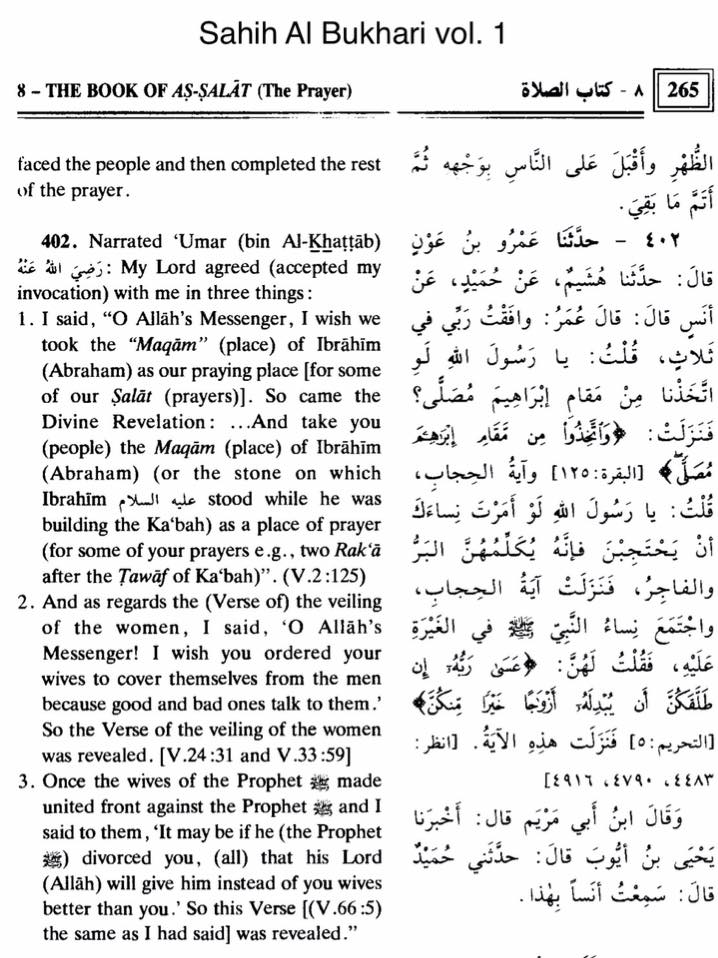
Quran 39:3 makes the mechanism explicit by attributing this justification to the opponents: “We worship them only so that they may bring us closer to Allah.” Allah was therefore not absent from their religious system: he was already the summit toward which the intermediaries were supposed to lead. This is precisely the kind of syncretic religion that late antique evidence now enables us to reconstruct. The controversial episode of the Satanic Verses and al-Lāt, al-ʿUzzā and Manāt belongs to the same environment of conflict between the new Muhammadan exclusivity and the surviving forms of the previous cult.
The Kaʿba was not born Islamic: it was Islamised
The continuity becomes even more evident in Mecca. Muhammad did not found a new sanctuary intended for his God. He took the existing sanctuary. The Kaʿba predates Islam, the pilgrimage predates Islam, the Meccan rituals predate Islam, and Allah was already known before Islam. The new movement retained the sacred centre and changed its theological ownership.
Al-Jallad and Sidky situate the Meccan cult within the transformation of the Arab cult of the Creator and interpret Muhammad’s project as its reform. There was no need to create a new God or a new religious centre: what already existed had to be Islamised. Muhammad retained the place and reformulated the rituals, eliminated the intermediaries and imposed the exclusivity of Allah. Muhammad’s conquest of Mecca completed through political and military power what preaching had begun on the religious plane: the pre-Islamic sanctuary was definitively monopolised by the new system.
The same logic emerges in the destruction of the sanctuary of Dhul Khalasa. The new religion retained the religious centre it could incorporate and destroyed the rival one. Islam did not build its sacred space from nothing: it selected, conquered, eliminated and rewrote.
Muhammad found Allah already prepared
The 2026 study reaches the heart of the matter: Muhammad’s mission did not consist in introducing Allah or in identifying him for the first time with the God of the Bible. That equivalence was already a product of late antiquity. The environment into which Muhammad was born was not the old Arab paganism left unchanged for centuries, but a system already profoundly modified by monotheism. His movement intervened to reform it and to “biblicise” further the syncretic cult of the Creator of western Arabia.
This removes, one after another, the elements that might be presented as revealed novelties. Allah already existed. Allah was already the Creator. Allah had already been assimilated to the biblical God. Public worship of the Creator was already dominant. The ancient deities were already in decline. Mecca already possessed its sanctuary and pilgrimage. Muhammad arrived when much of the religious work had already been done.
Judaism and Christianity supplied the rest of the material
Allah and the Kaʿba constitute only part of the earlier heritage incorporated into Islam. The Quran is populated by Adam, Noah, Abraham, Lot, Joseph, Moses, David, Solomon, Jonah, Zechariah, John, Mary and Jesus. All predate Islam and come from biblical, Jewish, Christian and parabiblical traditions. Early Islam therefore drew material from two large reservoirs at the same time: from Arabia it took Allah, the Meccan sanctuary and earlier cultic practices; from the Jewish-Christian world it took prophets, narratives, genealogies, eschatology and the language of revelation.
The new religion arose by merging these materials. The result is what the term syncretism describes: a new construction produced by combining and reinterpreting elements belonging to earlier traditions. Muhammad did not appear in a religious vacuum, but in late antiquity, when the Near East was saturated with the Bible, Christianity, Judaism, apocalyptic thought, prophetic narratives and theological debates. Islam collected that material together with the Arab religion it found locally and recomposed it within a new architecture.
What, then, remains of “revelation”?
This is where chronology becomes the central problem for the Islamic claim. Allah was already known. His function as creator was already known. His identification with the biblical God had already taken place. Arab monotheism was already advanced. The Kaʿba already existed. The pilgrimage already existed. Abraham, Moses, Jesus and Mary already belonged to earlier traditions. Muhammad did not receive an empty religious field into which knowledge foreign to history suddenly appeared. He received an enormous heritage already available to select, correct, merge and reinterpret.
The more epigraphy reconstructs what existed before Islam, the less the Quran appears as an irruption of knowledge from outside history and the more it appears as a recognisable product of its own historical environment. No revelation is needed to explain why Muhammad knew Allah when Allah was already worshipped; no revelation is needed to explain the identification with the biblical God when that identification predated Muhammad; no revelation is needed to explain the presence of biblical characters in an environment already exposed to centuries of Judaism and Christianity. The material came before the “revelation.”
Islam took Abraham and then declared him a Muslim
At this point the new system had to solve the problem of its own posteriority to the material it used. The Quranic solution is radical: retroactively Islamise the past. In Quran 3:67 Abraham is declared neither a Jew nor a Christian, but a “ḥanīf, a Muslim.” A religion that appeared historically in the seventh century takes a figure from biblical tradition and declares him a Muslim millennia before the birth of Islam.
The procedure is perfect: take the past and then declare that the past already belonged to you. Dependence is transformed into precedence. It would not be Islam that took Abraham from biblical tradition; Abraham would already have been Islamic. It would not be the Quran that used Jewish and Christian material; Jews and Christians would have corrupted an originally Islamic religion. What historically predates Islam is seized and rewritten as an anticipation of Islam.
From the pre-Islamic Kaʿba to Abraham’s Kaʿba
The same operation is applied to the Meccan sanctuary. The Kaʿba existed before Islam and Muhammad retained it. The Quran, however, makes the decisive move by associating it with Abraham and Ishmael. In 2:125–127 the two patriarchs are linked to the House and its purification; the Arab sanctuary is thus backdated to biblical history and transformed into the original seat of Abrahamic monotheism.
The Islamic construction of the relationship between Abraham, Ishmael and the pilgrimage to Mecca shows the operation in its most complete form. The sanctuary is not acknowledged as a pre-Islamic religious inheritance subsequently appropriated by the new movement: it is declared the original property of the new religion. Even in the Quranic account of Abraham in Sura 2, the biblical figure is absorbed into a religious genealogy leading directly to the Islamic community.
Islam came after the Kaʿba and after Abraham, took both and then claimed that both had always belonged to Islam.
First it took the biblical heritage, then it rewrote the Bible
The same mechanism affects Christianity and Judaism. Jesus becomes an Islamic prophet, Moses is transformed into a predecessor of Muhammad, Mary enters the Quran, and the earlier Scriptures become fragments of a supposed original revelation that was later distorted. Islam does not acknowledge its dependence on the preceding heritage: it reverses the direction of dependence.
Even Muhammad’s absence from the biblical Scriptures is turned by apologetics into a supposed consequence of their corruption, while retrospective announcements of the Arab prophet are sought where the text does not contain them. The case of the supposed prophecy of Muhammad in the Gospel Paraclete perfectly illustrates this logic: first the Quran claims that Jesus announced the future messenger, then apologetics must find in earlier Christianity a prophecy capable of fitting the Quranic claim.
The operation remains the same: appropriate the past, alter it and finally use it as a witness for the religion that appropriated it.
Syncretism and religious plagiarism in the birth of Islam
The term religious plagiarism describes this dynamic when it is properly understood: not as literal line-by-line copying, but as the appropriation of earlier material, its reworking and the erasure of the genealogy from which it came. Religions absorb material through oral narratives, preaching, trade, communities, liturgies, legends, practices and circulating traditions; what matters is the historical dependence of the material used.
In the case of Islam this dependence runs through every fundamental level: Allah predates Islam; Allah as creator predates Islam; his identification with the biblical God predates Muhammad; the monotheisation of Arabia predates Muhammad; the Kaʿba and pilgrimage predate Muhammad; al-Lāt, al-ʿUzzā and Manāt predate Muhammad; Abraham, Moses, Jesus, Mary and the biblical heritage predate Muhammad. The new movement took this material, reorganised it within its own synthesis and subsequently declared that it had not taken it at all: it had supposedly been revealed by the God who had established it from the beginning.
This is the step that transforms documentable syncretism into what we call religious plagiarism here: the new religion absorbs earlier material and then erases its dependence by attributing that material directly to God.
The real invention is backdating
The most original element of the Islamic operation is not Allah, because Allah already existed; it is not the universal Creator, because his transformation preceded Muhammad; it is not the Kaʿba, because the sanctuary predates Islam; it is not Abraham, Moses or Jesus, because they belong to much older traditions. The real Islamic operation consists in assembling these elements and backdating the final product.
Allah becomes the Islamic Allah from all eternity. Abraham becomes a Muslim. The Kaʿba becomes Abrahamic. Jesus becomes the herald of Muhammad. Moses becomes a prophet of the same religion that would culminate in the Quran. Differences with Judaism and Christianity are explained by accusing the earlier traditions of having corrupted what Islam, arriving centuries later, claims to restore.
The later religion thus proclaims itself the oldest. Islam takes its own cultural sources and retroactively transforms them into its predecessors.
The history of Islam moves in the opposite direction from its theology
The Islamic narrative begins with an eternal religion of Allah, professed by Abraham, corrupted by human beings and finally restored by Muhammad. Documentable history moves in the opposite direction: first we find ancient Arab religion and its creator Allāh; then contact with Jewish and Christian monotheism; then the identification of Allah with the universal God; then the decline of the ancient deities; then the predominance of invocation to Allah; then Muhammad arrives; then Arab and biblical material is brought together within a new religion; finally that religion declares Abraham a Muslim and the Kaʿba Abrahamic.
The chronology exposes the reversal. What is presented as the origin appears historically at the end. What is presented as revelation has recognisable antecedents. What is presented as restoration emerges from a process of syncretism, appropriation and reworking.
Conclusion: Allah before Islam dismantles the origin narrative
Allah existed before Islam, was worshipped before Islam and was known as Creator before Islam. His transformation into the universal God preceded Muhammad, as did syncretic Arab monotheism, the Kaʿba, the pilgrimage, the deities against which the Quran polemicises and the biblical heritage from which the Islamic text took characters and narratives.
Muhammad arrived within this already formed world, and the movement born around his preaching worked with what it found: an Allah already transformed by late antique monotheism, an existing sanctuary, earlier Arab practices and an immense Jewish-Christian heritage. These elements were selected, merged, reorganised and stripped of what was incompatible with the new system, until a religion was constructed that then performed the decisive operation: it erased the real chronology and backdated the result.
Allah is presented as though he had always been the God of Islam; Abraham as a Muslim; the Kaʿba as the sanctuary of Abrahamic monotheism; Jesus as the herald of Muhammad. Jews and Christians thus become, in the Islamic reconstruction, responsible for the corruption of a religion that Islam, which historically appeared only in the seventh century, nevertheless claims to have possessed from the beginning.
Islam therefore tells the story of its own birth by reversing the direction of history. On the historical plane, the Arab Allah, the pre-Islamic religious world, late antique monotheism, Judaism, Christianity, the Kaʿba and the biblical heritage come first; only afterwards does Muhammad arrive. On the theological plane, by contrast, everything that came before is absorbed and retroactively declared Islamic, until historical dependence is transformed into a claim of precedence.
The sequence that emerges is linear: first the religious materials exist, then the Islamic synthesis is born, and finally that synthesis presents itself as the origin of the materials on which it depends. The new epigraphy makes it increasingly difficult to separate the birth of Islam from this process of appropriation and reworking: Allah was not introduced into history by Islam, but was incorporated into a new religious construction, while the earlier history was rewritten and presented as “revelation.”
Main sources
Ahmad Al-Jallad, Ancient Allah: An Epigraphic Reconstruction, Journal of Semitic Studies, vol. 70, no. 2, 2025, pp. 693–748. Oxford Academic.
Ahmad Al-Jallad and Hythem Sidky, Late Antique Allāh: Ancestral Arabian Religion and the Monotheistic Zeitgeist, Arabian Archaeology and Epigraphy, 2026. Wiley Online Library.